 Call: (252) 299-2240


- Wilson Based
A painting company located in Wilson, NC 27893.
- Free Estimates
Professional painting services. Call (252) 299-2240 for a free estimate.
 Wilson Based
 Free Estimates
Cabinet Painting
Painting kitchen cabinets changes how a kitchen looks without tearing anything out. The boxes, doors and drawers stay, and the work goes into making paint stick to surfaces that hands, steam and cooking grease touch every day. Cabinet painting is one of the services Cesar's ProFinish offers, for homes in Wilson, NC and the towns we serve.
Cabinet Painting in Wilson, NC
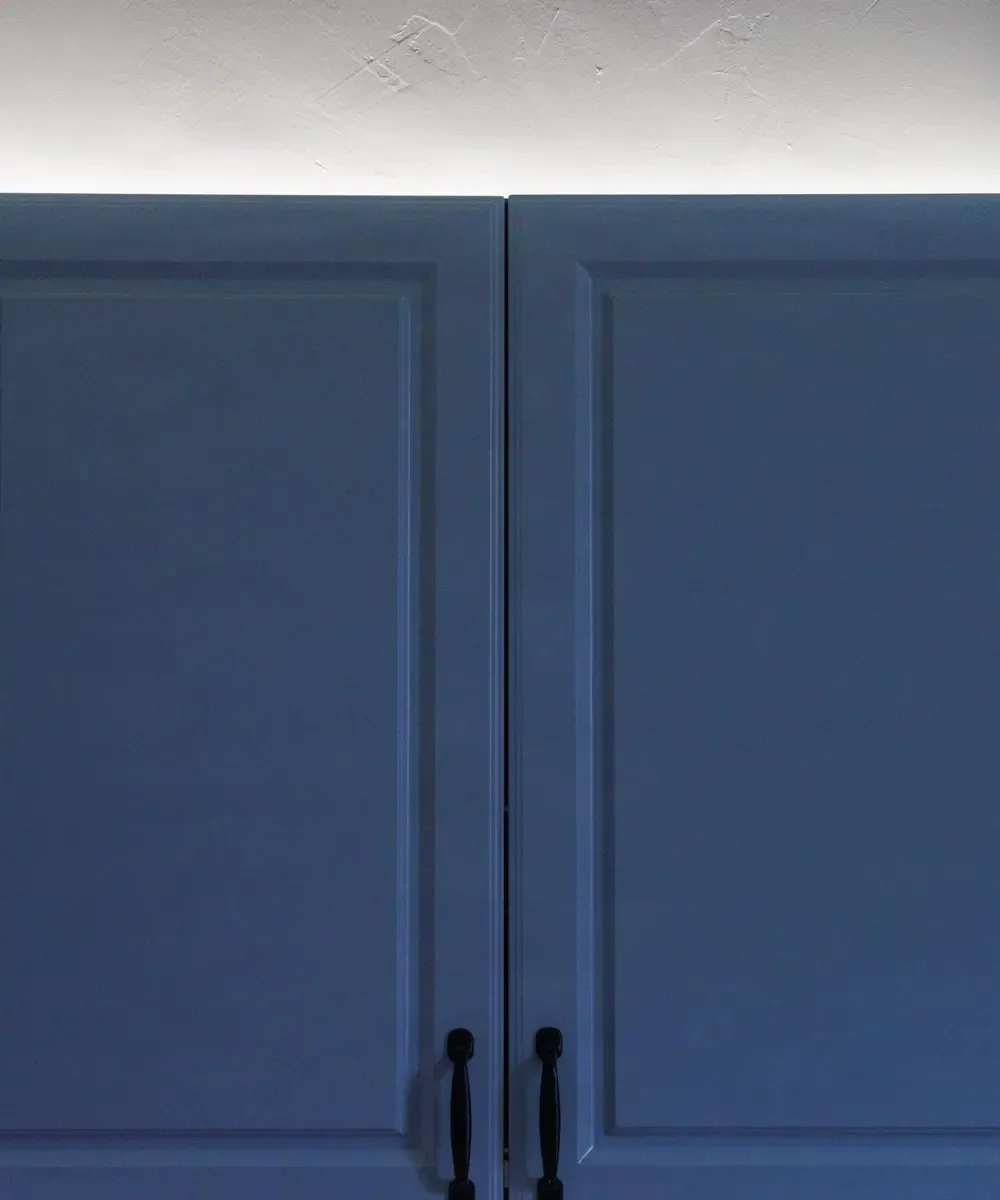
In the five cities we serve, the median home was built anywhere from 1966 in Kinston to 1996 in Greenville (US Census, ACS 2024 5-year), so the typical house here is 30 to 60 years old. Many kitchens still have their original cabinets, solid wood or MDF, with boxes square and sound enough to paint rather than replace. What has worn out is the finish: a dark stain that makes the room feel smaller, a clear coat gone sticky near the stove, chipped door edges and a dull band around every pull.
The same steps apply to bathroom vanities, which take steam and splashes every day, to laundry room cabinets, and to built-ins such as bookcases, desks and the cabinets beside a fireplace. Paint changes the color and the finish of what you have. It does not change the layout, the door style or the boxes, so it suits cabinets that work well and simply look tired.
Surface Preparation for Cabinets
Cabinets get touched more than any other painted surface, so the paint has to grip hard, and grip comes from preparation. Surface preparation is a service of its own for us, and on cabinets it is most of the job:
- Cleaning and degreasing. Cooking grease settles on the doors near the stove, and hand oils build up around every knob and pull. Paint will not bond to either, so every surface is scrubbed with a degreaser and rinsed first.
- Deglossing or sanding. Factory finishes and old clear coats are slick. A liquid deglosser or a scuff sanding with fine sandpaper dulls the surface so primer has something to hold, and the dust is vacuumed and wiped off.
- Repairs. Dents, chips and gouges are filled with wood filler and sanded flush, and so are the old hardware holes if you are changing pulls.
- Caulking. Small gaps where a cabinet meets the wall, or where a face frame meets an end panel, are caulked so the paint line comes out clean.
- Priming. A bonding primer goes on next. Oak and knotty pine can bleed a yellow-brown stain through light paint, so they get a stain-blocking primer.
- Protection. Countertops, floors, the backsplash, appliances and the inside of the boxes are covered or masked before any sanding starts.
Oak's open grain also shows through paint as a fine texture. Filling it first for a smooth finish is an extra step to ask about at the estimate.
How Kitchen Cabinet Painting Is Done, Step by Step
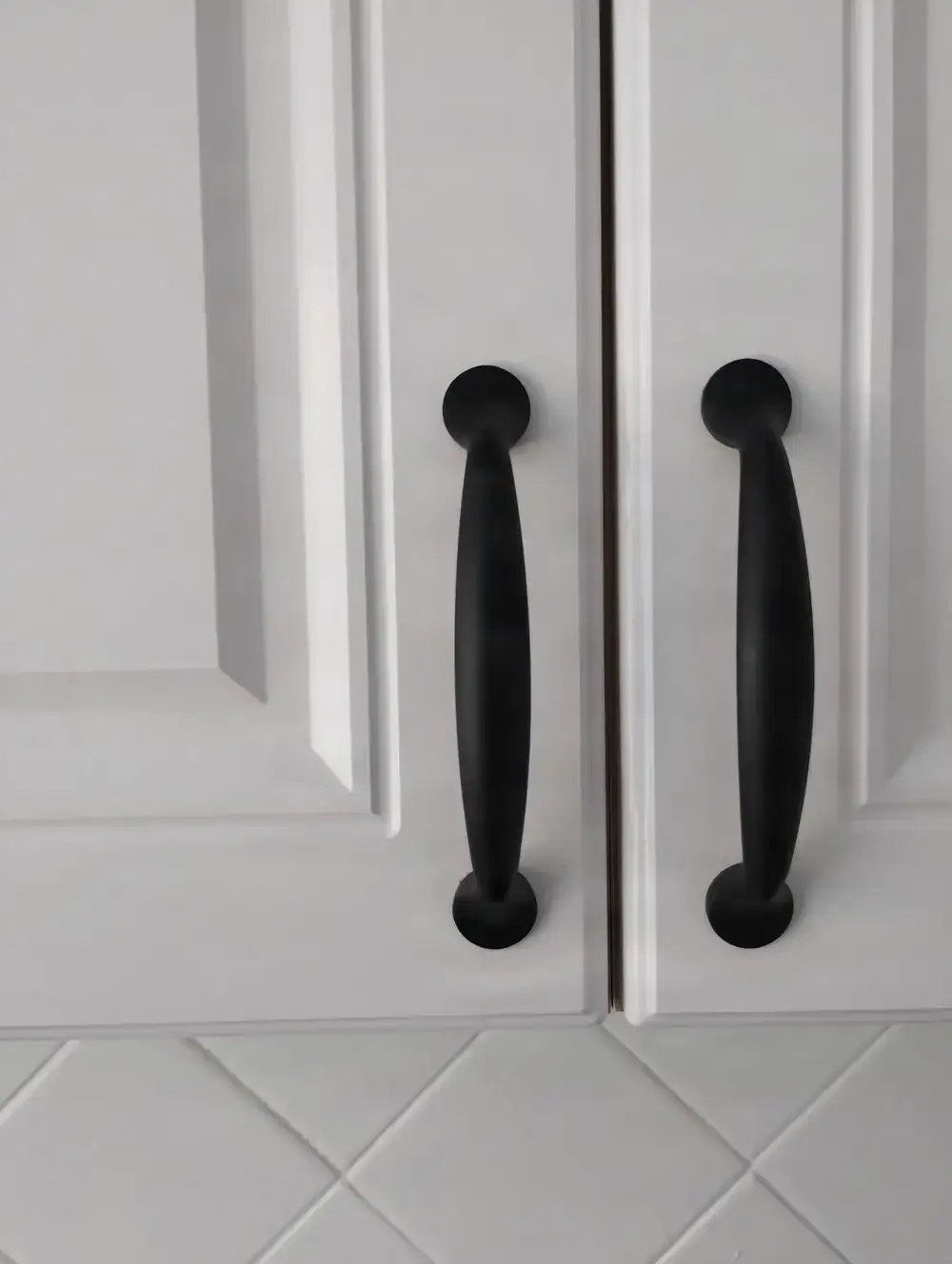
A cabinet job usually runs in this order:
- Doors and drawers come off and are labeled. Each one gets a number that matches its opening, because hinges wear to fit one spot and a door rarely hangs right in another.
- Hardware comes off. Hinges, knobs and pulls are removed and bagged by number, not painted over.
- Thin coats go on over the primer. The common ways are brushing and rolling, or spraying. Doors and drawer fronts are laid flat and painted one side at a time, the back first. Face frames and end panels are painted in place.
- Light sanding between coats knocks down dust and brush marks so the next coat lays smooth. Two thin coats level out better than one thick coat, which can sag and stays soft longer.
- Cure, then rehang. Doors go back on, with their own hinges in their own openings, once the paint is hard enough to handle.
The common paints for cabinets are hard-drying enamels, water-based or oil-based, in satin or semi-gloss. A higher sheen wipes clean more easily but shows every brush mark and dent, one more reason the prep matters. The aim is a professional finish that leaves the kitchen looking like new, not like a kitchen that was painted over.
Why Cure Time Matters for Cabinet Paint
Paint dries and cures in two stages. It is dry to the touch once the water or solvent has evaporated, often within hours. It cures as the film keeps hardening after that, and the label on the can gives the full cure time, which for many cabinet enamels runs to weeks. In between, the paint feels dry but is still soft underneath: a door closed too soon can stick to the frame, and dishes stacked on a fresh shelf can leave rings.
Summer slows both stages. NOAA's normals put the summer dew point near 69°F; mornings run near saturation, and damp air slows the evaporation paint needs. Running the air conditioning during the job and while the paint cures pulls moisture out of the air. For the first weeks after the doors go back up, close them gently and wipe spills with a soft cloth rather than a scrubbing pad.
What Paints Well, and What Needs a Different Approach
- Solid wood such as oak, maple or pine paints well once it is cleaned, scuffed and primed.
- MDF paints smoothly, since there is no grain to show. Its cut edges are porous and soak up primer, so they are sealed before the finish coats.
- Thermofoil and laminate are a vinyl film or a plastic layer over a board, and their slick surface does not take primer the way wood does. They need a different approach, so ask about them at the estimate and we will look at what you have.
Not sure what yours are? Look at the back and the edge of a door. Wood shows grain. MDF looks like smooth, dense fiberboard where it is chipped. Thermofoil is a smooth film wrapped over the front and edges, and it tends to lift near the heat of a stove or a dishwasher's steam.
How Much It Costs to Paint Kitchen Cabinets
The cost of painting kitchen cabinets depends on a few things you can check yourself:
- The number of doors and drawers. Each one is removed, prepped and painted on both sides, so the count matters more than the size of the room.
- Their condition. Heavy grease, peeling old paint, chips and dents all add prep.
- The color change. Dark stained oak to white takes a stain-blocking primer and can take an extra coat.
- The inside of the boxes. Most kitchens keep the interiors as they are and paint the outside faces, frames, ends and both sides of the doors. Painting the interiors adds a lot of surface.
- Extras, such as a vanity in the same job or crown molding along the top of the cabinets.
If the walls around the cabinets need paint as well, our interior painting page covers that work, and trim painting covers baseboards, door casing and crown molding. Count your doors and drawers, then contact us for a free estimate.
Ready to Paint Your Kitchen Cabinets?
Call (252) 299-2240 for a free estimate.
Questions We Hear a Lot

-
It depends on the number of doors and drawers, their condition, how big a color change you want, and whether the inside of the boxes is painted too. A vanity or laundry cabinets can go in the same job. We look at the kitchen and give you a free estimate: call (252) 299-2240.
-
Longer than it takes to feel dry. Cabinet enamels are dry to the touch within hours but keep hardening after that, and the label on the can gives the full cure time. Humid weather slows it down, so until the paint has cured, close doors gently and wipe spills with a soft cloth.
-
Thermofoil and laminate have a slick vinyl or plastic surface that does not take primer the way wood or MDF does, so they need a different approach. Ask about them at the estimate and we will look at the cabinets you have.
-
If the boxes are solid wood or MDF, square and sound, and the layout works for you, painting changes the look and keeps what you have. Paint does not change the layout or the door style: refacing and new cabinets are cabinetmaker's work, and our part is the paint.
-
Yes. Bathroom vanities, laundry room cabinets and built-in bookcases and desks are painted the same way as kitchen cabinets: cleaned, deglossed or sanded, primed, and finished in thin coats. They can go on the same estimate as the kitchen.
-
Yes. Free estimates are available. Call (252) 299-2240 or use the contact form.
-
We are based in Wilson, NC 27893 and serve homes in Wilson, Greenville, Rocky Mount, Goldsboro and Kinston. Call (252) 299-2240 or use the contact form to talk about your project.
-
- Location Based in Wilson, NC 27893
- Free Estimates Call or email usWilson, NC


