 Call: (252) 299-2240


- Wilson Based
A painting company located in Wilson, NC 27893.
- Free Estimates
Professional painting services. Call (252) 299-2240 for a free estimate.
 Wilson Based
 Free Estimates
Exterior Painting
Exterior paint is what keeps the wood on a house covered against sun, rain and summer dew. Cesar's ProFinish offers interior and exterior painting for homes in Wilson, NC and the towns we serve around it. On the outside of a house, that means siding, trim, doors, porches, railings and shutters, and the prep that comes before any of them.
Exterior House Painting in Wilson, NC

Each surface takes paint a little differently:
- Wood siding, lap or board-and-batten, swells and shrinks with heat and moisture, so it needs a paint that stays flexible and primer wherever the wood is bare.
- Fiber-cement siding is stable and holds paint well. It is usually repainted when its finish has faded or when you want a new color.
- Trim: fascia, corner boards, and window and door casing. Trim takes the weather at its edges and joints, which is where peeling usually starts.
- Doors, front and back, painted on the face and the edges.
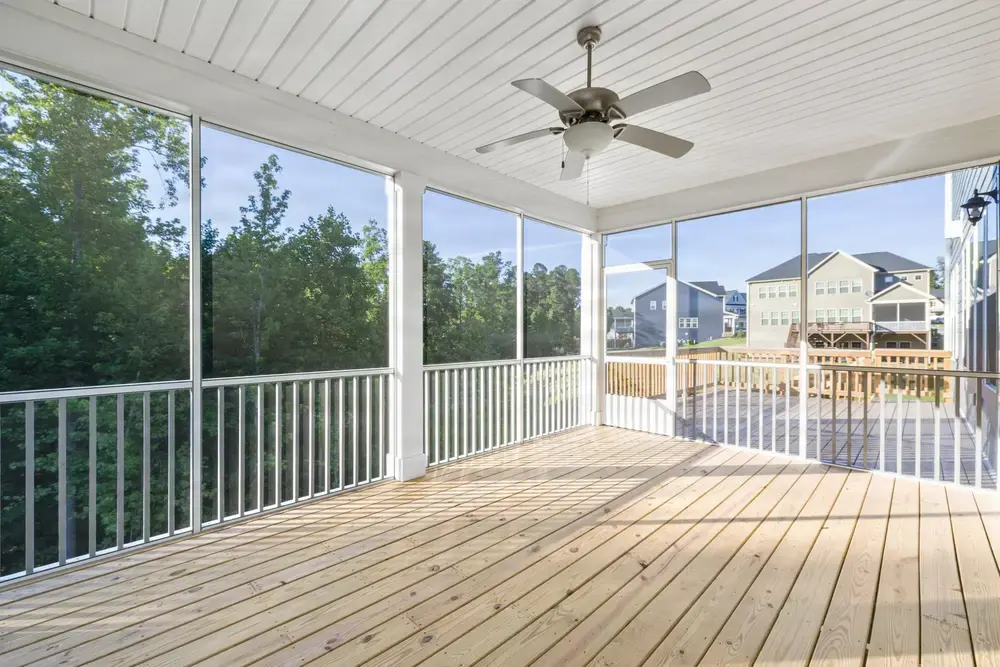
- Porches: ceilings, posts, railings and steps, the parts of a house that hands and feet touch every day.
- Shutters, often painted the same contrast color as the front door.
Vinyl siding can be painted too, with a paint made for vinyl and a color from the range made for it. Vinyl expands in the heat, and a color much darker than the original panels soaks up more heat in the sun, which can make them warp.
Surface Preparation for Exterior Paint
Most of an exterior job is prep. Paint holds only as well as the surface under it, and new paint over loose old paint comes off with it. On the outside of a house, the prep runs in this order:
- Cleaning. Dirt, pollen, cobwebs and the chalky film that old paint leaves behind are washed off, and the siding dries fully before anything else happens. Paint over chalk or pollen bonds to the dust, not to the house.
- Scraping. Loose and peeling paint is scraped back to a sound edge. Paint that is still tight to the wood stays.
- Sanding and filling. The edges where scraped spots meet old paint are sanded smooth, so the step between them doesn't show through the new coat. Glossy trim is sanded dull so the new paint can grip, and nail holes and small cracks are filled with an exterior filler.
- Caulking. Open gaps where trim meets siding and around windows and doors are caulked, so rain can't get behind the paint. The lower edges of lap siding stay open: those laps let moisture out, and sealing them traps it in the wall.
- Priming. Bare wood, filled spots and areas scraped down to wood get an exterior primer before the first coat of paint.
- Protecting. Walkways, porch floors, outdoor furniture and shrubs are covered, and light fixtures, hardware and glass are masked.
Soft or rotted wood is a different problem. Paint will not hold on wood that is breaking down, so when the prep finds soft trim, a rotted sill or a damaged board, we point it out before any paint goes on, so it can be repaired first.
The Best Time to Paint a House in Eastern NC
Exterior paint needs two things: a dry surface, and air and surface temperatures inside the range its label asks for. Here, both come down to the forecast. NOAA's 1991-2020 normals for the Rocky Mount-Wilson Regional Airport station, between the two cities, count 44.38 inches of precipitation a year, falling on 128.2 days with measurable rain. Just southwest of Wilson, the Wilson 3 SW station averages 50.3 inches a year. Summer is the wettest season at both, so the season and the week's forecast set the schedule more than anything else.
Dew is the other half. NOAA's normals put the summer dew point near 69°F at the Goldsboro 4 SE station; mornings run near saturation. On those mornings siding is wet to the touch, and paint waits until the dew has dried off. Paint put on late in the day has the opposite problem: evening dew can settle on it before it sets, which can leave a sticky, streaky film on the surface. So the painting day runs from when the dew lifts until well before it comes back.
- Spring and fall are usually the best seasons, with milder days and less rain than summer, though the morning dew is still there. In late fall, watch the overnight low too: the paint has to stay inside its label's range while it dries, not only while it goes on.
- Summer works, around the heat and the afternoon thunderstorms. The work follows the shade around the house, because paint on siding in full sun dries too fast and shows lap marks.
- Winter has short days and cold nights, so painting waits for mild, dry stretches when the label allows it.
Every label also gives the time a coat needs before rain. The forecast is checked against it before a side is started, because a coat that gets rained on before it sets can streak or wash off.
Choosing Exterior Paint, Sheen and Color
The common choice for siding and trim is a 100% acrylic latex exterior paint. Acrylic stays flexible as wood moves with the heat and the moisture, and it holds its color well in strong sun. Primer is matched to the surface: an exterior wood primer on bare wood, and a stain-blocking primer on woods like cedar, whose natural tannins can bleed through light paint as brown spots.
Then the sheen:
- Siding: flat or satin. Flat hides dents, filled spots and uneven old boards best. Satin sheds dirt and pollen a little better and is easier to wash.
- Trim and doors: semi-gloss. A harder, shinier coat stands up to hands, weather and cleaning, and it frames the windows and doors against the siding. Our trim painting page covers trim inside and out.
For color, try samples on the house itself, on a sunny side and a shady one, and look at them in the morning and late afternoon: a color usually looks lighter on a wall outside than on a paint chip. If your neighborhood has a homeowners association, check its rules before you choose. Some ask for approval before a house changes color.
Porches, Decks and Older Houses
Porch floors and steps take a floor paint made for foot traffic, with the same cleaning, scraping and priming as the siding. A deck is different. Paint forms a film, and on flat deck boards that film tends to peel where water sits, so most decks get stain, which soaks into the wood instead. Our deck staining page explains stain types and timing.
The older the house, the more of the job is prep, because siding and trim that have carried several coats of paint need more scraping and priming. In Wilson, 46.5% of homes were built before 1980, and in Kinston the median home was built in 1966 (US Census ACS 2024 5-year). On a house that age, peeling trim, bare wood and old caulk decide how much of the work happens before the first coat.
Is Your House Ready for New Paint?
Call (252) 299-2240 for a free estimate.
Questions We Hear a Lot

-
Spring and fall are usually best: milder days and less rain than summer, the wettest season here. Summer works around the heat and afternoon storms, and in every season the paint waits for the morning dew to dry off and stops early enough to set before evening dew.
-
The paint's label gives the lowest air and surface temperature it can go on at, and that differs from one paint to another. The temperature also has to stay inside that range while the paint dries, so a mild afternoon followed by a cold night in late fall can still be too cold.
-
Rain on a coat that hasn't set can leave streaks or wash some of it off. The label gives the time a coat needs before rain, so the forecast is checked against it before a side is started. A spot that rain marks can be cleaned and repainted once it is dry.
-
It depends on the size and height of the house, the kind of siding, how much scraping, filling and priming it needs, how much trim and how many colors there are, and whether doors, shutters and porches are included. We look at the house and give you a free estimate. Call (252) 299-2240.
-
Yes, with a paint made for vinyl and a color from the range made for it. A color much darker than the original panels takes on more heat in the sun and can make the vinyl warp, so the color is settled before anything else. The siding is cleaned and dried before paint.
-
Yes. Free estimates are available. Call (252) 299-2240 or use the contact form.
-
We are based in Wilson, NC 27893 and serve homes in Wilson, Greenville, Rocky Mount, Goldsboro and Kinston. Call (252) 299-2240 or use the contact form to talk about your project.
-
- Location Based in Wilson, NC 27893
- Free Estimates Call or email usWilson, NC


