 Call: (252) 299-2240


- Wilson Based
A painting company located in Wilson, NC 27893.
- Free Estimates
Professional painting services. Call (252) 299-2240 for a free estimate.
 Wilson Based
 Free Estimates
Drywall Repair
Walls take a beating: a doorknob swung too hard, a shelf anchor pulled out, and the slow movement of the house itself. Drywall repair is one of our services, and a repair is finished with primer and paint so the patched wall reads as one even surface. We repair walls and ceilings in homes in Wilson, NC and the towns we serve.
Drywall Repair in Wilson, NC
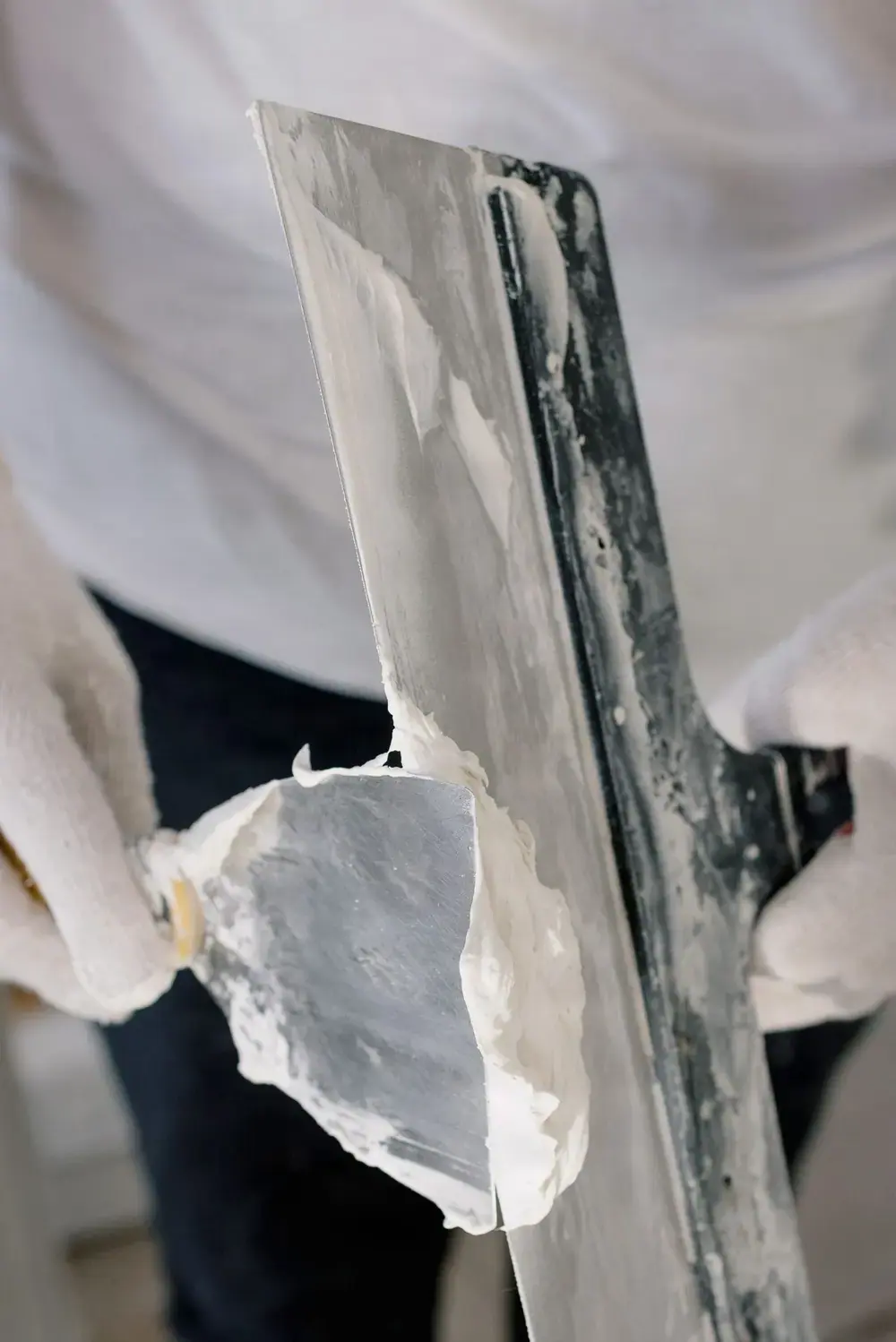
Most homes around here have had decades to settle. Across Wilson County, the median home was built in 1986, and 42.3% of homes went up before 1980 (US Census, ACS 2024 5-year). Framing lumber shrinks as it dries and shifts a little as a house settles, and drywall fastened to it shows that movement in a few familiar ways:
- Nail pops and screw pops: small round bumps or cracked circles where a fastener has backed out of the framing and pushed the compound over it loose.
- Cracks above doors and windows, running at an angle from the top corners of the opening, where the framing flexes most as the house moves.
- Cracks along seams and inside corners, where the tape between two sheets has let go.
The seasons keep those problems coming back. The air here swings from humid summers to drier, heated winters, and wood framing swells and shrinks a little with each change. Where tape has lost its grip, a crack that was only painted over opens again the next season. So a repair has to go back to the cause rather than cover it.
What Drywall Damage Can Be Repaired
Most damage can be repaired without replacing whole sheets. The method depends on the damage:
- Nail holes, anchor holes and small dents are filled with spackle, sanded flat and primed.
- Nail and screw pops get a new drywall screw just beside the old fastener to pull the sheet tight. The old one is set below the surface or pulled, then covered with thin coats of compound.
- Cracks at seams and corners are opened up, the loose tape is cut away, and new tape is bedded in compound and covered with wider coats.
- Doorknob holes get a backed patch: a mesh or metal patch, or a piece of drywall with wood backing behind it, so the patch does not sink or crack when it is pressed.
- Larger holes are cut back to a clean square. Wood backing is screwed inside the opening, a new piece of drywall is cut to fit and screwed to it, and the seams are taped and mudded like any other joint.
- Damaged corner bead, the metal or vinyl edge on outside corners, is cut out where it is dented or cracked, and a new section goes on and is coated smooth.
- Stained or soft spots left by a leak, once the leak itself has been fixed by the right trade, are cut out and patched if soft, or sealed with a stain-blocking primer if firm.
We repair the walls and ceilings you have; hanging new drywall for a remodel is not a service we offer. Ceilings are repaired the same way, and our ceiling painting page covers the paint that follows.
How Long It Takes to Patch Drywall
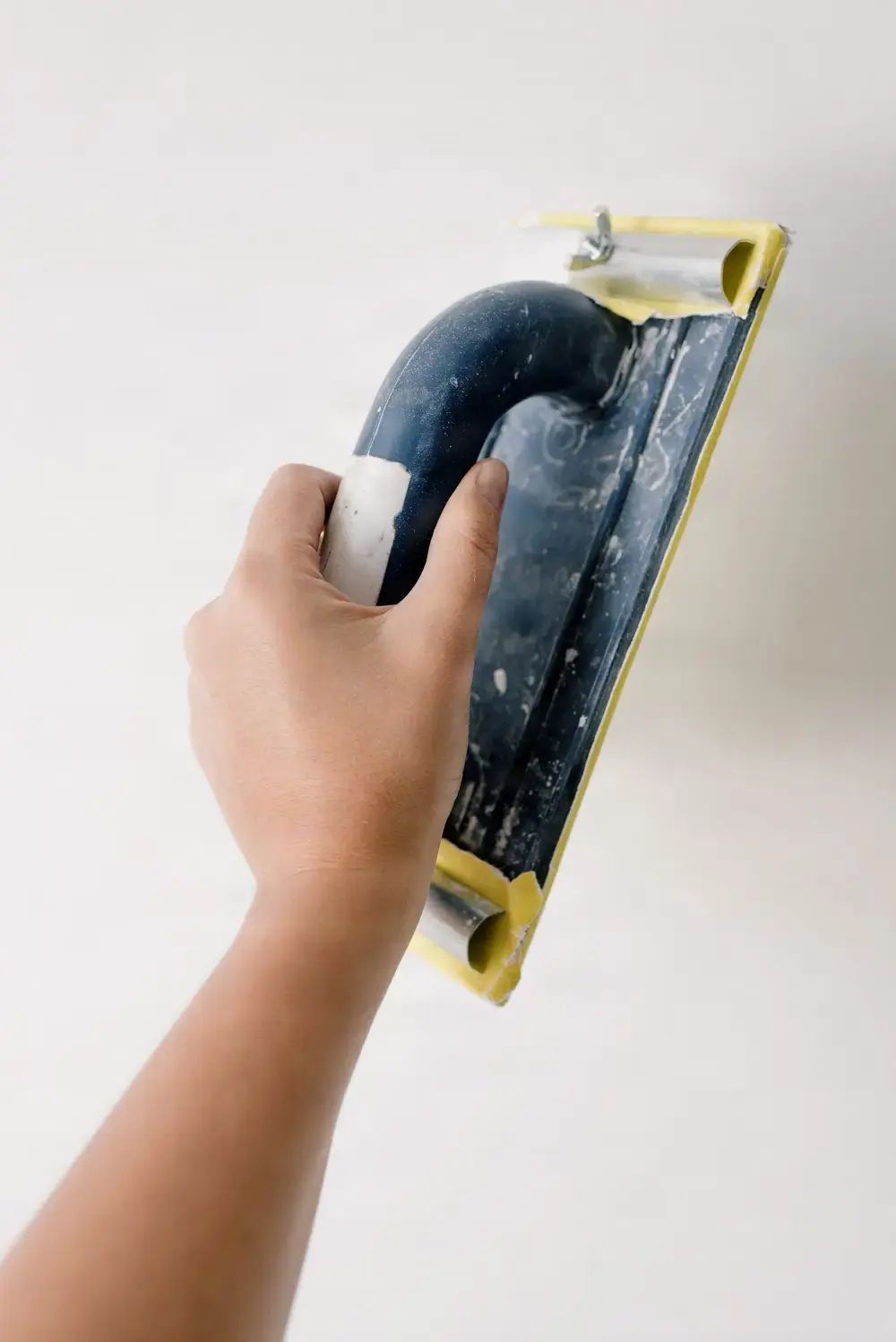
Filling a hole is easy; making it disappear under paint takes time, because a good patch is built in layers:
- The first coat beds the tape or fills the hole. Joint compound shrinks as it dries, so a deep fill always sinks a little.
- The second coat fills that shrinkage and is spread wider than the first.
- The finish coat is thinner and wider again, feathered out to nothing at the edges so the patch blends into the wall around it.
- Light sanding between coats and after the last one leaves the surface flat to the touch.
Each coat has to dry before the next goes on, and that is where the time goes. Premixed joint compound dries as its water evaporates, so a humid day or a cool, closed-up room slows it down. Setting-type compound, mixed from a powder, hardens by a chemical reaction within a working time printed on the bag, which helps with deep fills and first coats. So the time depends on the size of the repair and the air in the house: a nail hole needs a fraction of the drying a retaped seam does.
Surface Preparation Before the Patch and the Paint
Surface preparation is a service of its own for us, and on a repaired wall it decides whether the patch shows. The steps drywall needs:
- Protecting the room. Sanding compound makes a fine dust that travels, so floors are covered with drop cloths and furniture near the wall is covered too.
- Cleaning. Kitchen and bathroom walls carry grease, soap film and hand marks that compound and primer do not stick to, so the area around a repair is cleaned first.
- Scraping and cutting back. Loose paint, crumbling compound and ragged edges are scraped or cut back to a firm edge.
- Sealing torn paper. Where the brown paper face of the drywall has torn, it is sealed with primer before any compound goes on. Wet compound on bare torn paper makes it bubble.
- Caulk, not mud, where the wall meets trim. A gap along a baseboard or door casing moves with the house, and caulk flexes where joint compound would crack.
- Priming the patch. After the final sanding, the dust is wiped off and every repaired area is primed before any paint goes on.
How to Fix a Bad Drywall Patch
A patch that shows through paint usually has one of three problems:
- A ridge or a halo. The compound was not feathered wide enough, so its edge stands above the wall and casts a ring of shadow in light from a window. The fix is to sand the edge down and skim a wider, thinner coat over it.
- Flashing. Joint compound soaks up paint differently from the painted wall around it, so an unprimed patch dries duller or shinier and shows in side light. Primer over the repair evens that out.
- The wrong texture. Orange peel is a fine, bumpy spatter like the skin of an orange; knockdown is a heavier spatter flattened with a knife into small flat islands. A smooth patch on a textured wall stands out, so the texture is matched over the repair before priming.
Even the same color rarely matches on a wall that has faded or been washed for years, so the usual fix is to paint the whole wall from corner to corner, where a change in shade will not show. Our touch-up painting page explains when a small touch-up blends in and when it does not, and interior painting covers whole rooms when the repairs are part of a bigger repaint.
In Goldsboro, one of the towns we serve, the median home was built in 1975, so many of its walls have had about half a century of settling and old patches. Tell us which walls or ceilings need work and contact us for a free estimate.
Got a Hole or a Crack That Keeps Coming Back?
Call (252) 299-2240 for a free estimate.
Questions We Hear a Lot

-
It depends on the size of the repair and how fast the compound dries. A small hole needs little filling, while a doorknob hole or a retaped seam takes two or three coats, each dried and sanded before the next, then primer and paint. Humid air slows premixed compound. Call (252) 299-2240 and we will look at the damage for a free estimate.
-
Filling a hole is easy. The hard part is making the patch disappear: the compound has to be feathered wide and thin, sanded flat, matched to the wall's texture and primed before paint, or the patch shows as a ridge or a dull spot.
-
Sand down the ridge at its edge, skim a wider and thinner coat over it, and sand again until it is flat. Match the texture if the wall has one, prime the patch, and paint the wall from corner to corner so the new paint does not show as a square.
-
Framing lumber keeps shrinking and shifting a little with the seasons, which pushes nails back out through the compound. Filling over a popped nail only hides it for a while. The fix is a new screw beside the old fastener to pull the drywall tight, the old one set or pulled, then compound, primer and paint.
-
Yes. Every repair is primed and painted to match, and we can paint the whole wall or room if a spot of new paint would not blend with the old. Drywall repair is often the first step of an interior painting job.
-
Yes. Free estimates are available. Call (252) 299-2240 or use the contact form.
-
We are based in Wilson, NC 27893 and serve homes in Wilson, Greenville, Rocky Mount, Goldsboro and Kinston. Call (252) 299-2240 or use the contact form to talk about your project.
-
- Location Based in Wilson, NC 27893
- Free Estimates Call or email usWilson, NC


