 Call: (252) 299-2240


- Wilson Based
A painting company located in Wilson, NC 27893.
- Free Estimates
Professional painting services. Call (252) 299-2240 for a free estimate.
 Wilson Based
 Free Estimates
Trim & Molding Painting
We paint ceilings and trim, and the trim half is molding painting for houses in Wilson, NC and nearby: the baseboards, casings, crown molding and doors that frame each room, and the trim boards on the outside of a house. Trim is a small share of a room's surface and a large share of how finished it looks, because the eye follows its straight lines and sharp edges.
Trim and Molding Painting in Wilson, NC
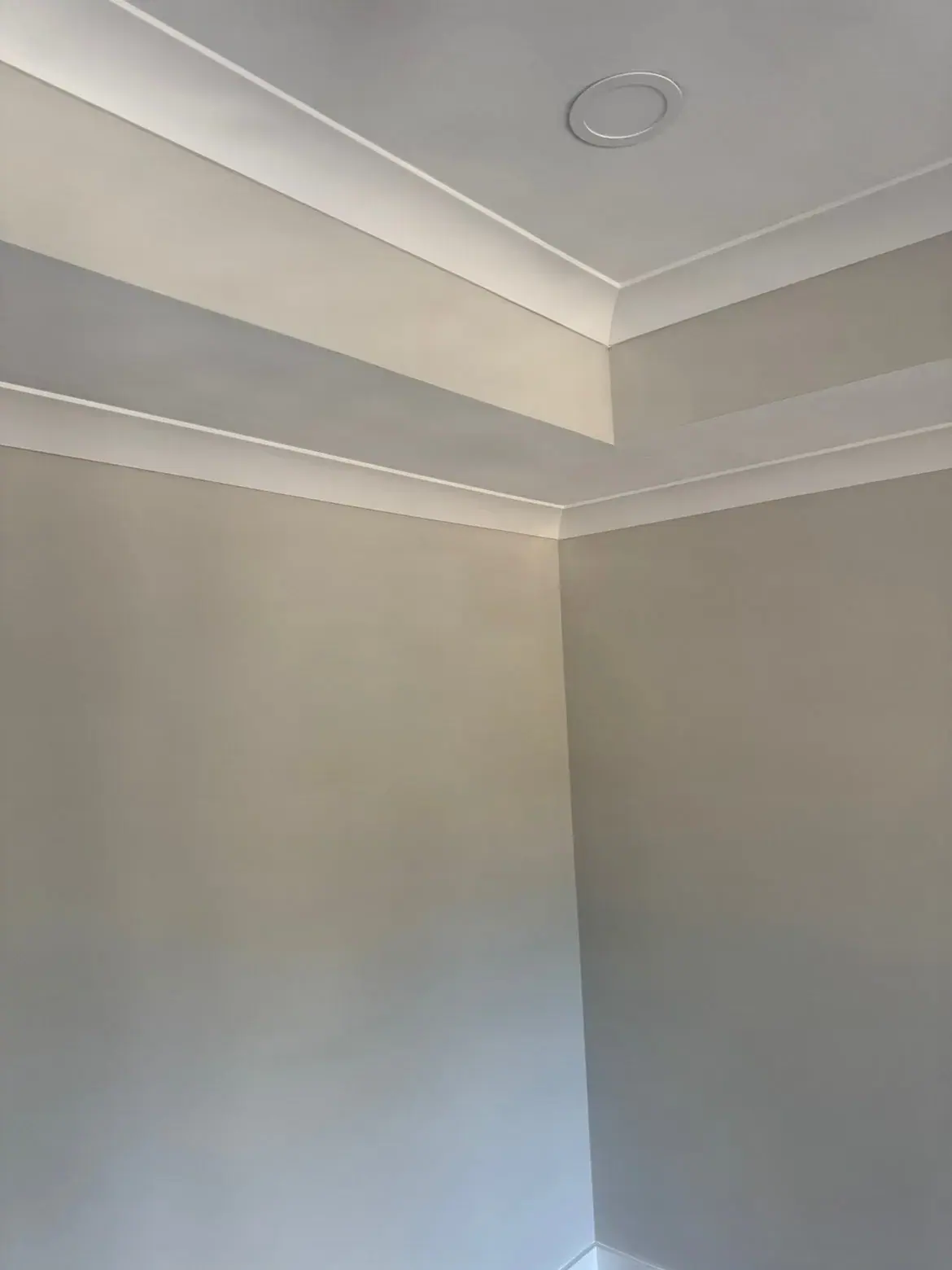
Trim covers more pieces than people expect:
- Inside: baseboards, door and window casings, window sills and aprons, crown molding, chair rail, and the doors themselves, both faces and all four edges.
- Outside: fascia boards along the roof edge, window and door trim, corner boards, and porch posts and railings. Exterior trim usually goes with a full repaint, covered on our exterior painting page, but it can be painted on its own when the siding paint is still sound.
Trim is brushed, not rolled. A brush pushes enamel into the curves of a molding and leaves fine strokes that level out as the paint dries, and it cuts a straight line where trim meets the wall. Inside a room, trim comes last, after the ceiling and walls, so drips from rolling the walls can't reach finished trim and the trim color gets the final edge. The rest of the room, from patching to wall sheens, is on the interior painting page.
Why Trim Joints Open Up in Eastern NC
Wood trim moves with the weather. NOAA's 1991-2020 normals for the Rocky Mount-Wilson Regional Airport station count 69.1 freezing nights a year and 53.5 days at 90°F or hotter. Between those extremes the wood swells in humid summer air and shrinks in dry winter air. Paint and caulk stretch only so far, so the joints are where trim shows its age first:
- Miters at the corners of door and window casings open into a thin dark line.
- Inside corners of baseboard and crown molding pull apart where two pieces meet.
- The top edge of a baseboard and the outer edge of a casing separate from the wall and leave a shadow line.
- Outside, the joints where window trim and corner boards meet the siding open up, and rain gets behind the paint there.
Painting over an open joint only paints the gap. Before paint, cracked and shrunken caulk is cut out, the joint is cleaned, and new paintable caulk is run and tooled smooth. Outside, those joints matter most, because they are where water gets in and paint starts to peel.
Surface Preparation for Painting Wood Trim
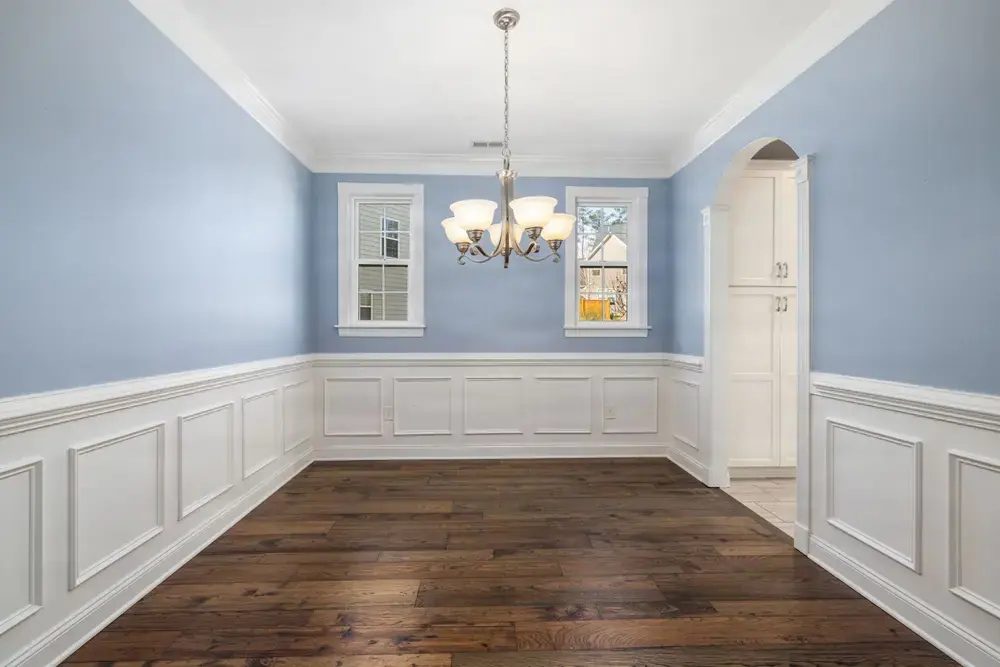
Trim sits close to hands and feet, and its glossy paint shows every flaw under it. Prep runs in this order:
- Cleaning. Baseboards collect dust and scuffs, and kitchen trim and doors carry grease from hands. Paint does not stick to either, so trim is wiped down and degreased.
- Scuff-sanding. Old semi-gloss and gloss are too slick for new paint to grip. A light sanding dulls the surface, and the dust is wiped off.
- Scraping, outside. Loose and peeling paint on exterior trim is scraped back to a firm edge, and the edge is sanded so it does not show through the new coat.
- Filling. Nail holes and dents in baseboard and casing are filled and sanded flush.
- Caulking gaps. Gaps where trim meets the wall are caulked, so the paint line between them comes out straight.
- Spot-priming. Bare wood, filler and knots get primer. Knots in pine trim bleed sap and a yellow-brown stain through paint unless they are sealed with a stain-blocking primer.
- Sanding between coats. A light sanding after the first coat knocks off dust specks and raised grain, so the second coat goes on smooth.
Floors are covered along every baseboard, and door hinges and strike plates are masked or taken off.
Trim Sheens and Trim Enamels
Trim takes a harder sheen than the walls. Semi-gloss is the usual pick for baseboards, casings and doors. Gloss is harder still and gives a crisper, more traditional look on doors and crown molding. Both wipe clean with a damp cloth. The shinier the paint, the more it shows dents and brush marks, so gloss needs the most careful prep.
Trim enamels come in two families, and the common choices are:
- Oil-based enamel. It levels out well, hiding brush marks, and dries very hard. It also dries slowly and smells strong, and white oil enamel turns yellow over the years, most of all in rooms with little daylight.
- Water-based enamel. Acrylic and waterborne alkyd enamels dry faster, smell less and stay white. The newer ones level out much like oil.
Old oil-based trim can be painted with a water-based enamel, but not straight over it: water-based paint peels off glossy oil paint unless the trim is sanded and given a bonding primer first. A rag with rubbing alcohol on a hidden spot tells which kind is there. Latex paint softens and comes off on the rag; oil paint does not.
Baseboards: Same Color as the Wall, or White?
Should baseboards match the wall color? Both ways work:
- Same color as the wall, usually in a higher sheen, such as semi-gloss baseboards against eggshell walls. The trim blends in and the room looks calmer and a little taller. Some people choose a lower sheen on the trim for an even quieter look, at the cost of a surface that scuffs more easily.
- A contrasting white or off-white, which outlines the room and suits traditional casings and crown. Contrast shows any wobble, so the line where baseboard meets wall has to be cut straight.
Painting baseboards with carpet
In a carpeted room, the carpet is pushed down and back from the baseboard with a putty knife and held there with wide painter's tape tucked into the gap, so the bottom edge of the board is exposed. Where tape will not hold, a paint shield, a thin metal or plastic blade, is held against the carpet while the brush runs along it. The tape comes off once the paint has set, and the carpet springs back against a clean edge.
Best Time to Paint Exterior Trim
Exterior trim paints best on a run of dry, mild days, which in eastern North Carolina usually means spring and fall. Summer is the wettest season at every weather station around here, and midsummer heat makes paint skin over before it can level. NOAA's normals put the summer dew point near 69°F; mornings run near saturation. Dew settles on trim overnight in spring, summer and fall, and paint put on damp wood does not stick well. So exterior trim is painted after the dew has dried off, within the temperature range printed on the can, and finished early enough in the afternoon for the paint to set before evening dew returns. A dry day after painting matters too, because fresh latex can streak or wash off in a shower.
The NOAA station behind that dew point number is near Goldsboro, one of the towns we serve, where 58.7% of homes were built before 1980: the age of house where trim prep takes longest.
Is Your Trim Ready for a New Coat?
Call (252) 299-2240 for a free estimate.
Photos From Our Jobs
Every photo here is from one of our own jobs. Tap one to see it bigger.

Questions We Hear a Lot

-
Either works. Matching the wall in a shinier sheen lets the trim fade into the room. A white or off-white baseboard draws a frame around it and fits older, more detailed molding. Choose the look first, then the sheen.
-
With tape and a steady hand. Wide painter's tape folds the carpet pile down and away from the wood, or a paint shield slides along under the brush where tape will not stay put. Once the paint has set and the tape is pulled, the carpet lies back against the baseboard.
-
Spring and fall, on a stretch of dry days with mild temperatures. Start once the morning dew is gone, stop with time left for the paint to set before evening, and skip days with rain in the forecast.
-
Because wood moves. Trim takes on moisture in a humid summer and dries out in winter, and the caulk in its joints tears at the weakest point. Before repainting, the old caulk is cut out and the joint is caulked again.
-
Yes. Free estimates are available. Call (252) 299-2240 or use the contact form.
-
We are based in Wilson, NC 27893 and serve homes in Wilson, Greenville, Rocky Mount, Goldsboro and Kinston. Call (252) 299-2240 or use the contact form to talk about your project.
-
- Location Based in Wilson, NC 27893
- Free Estimates Call or email usWilson, NC


