 Call: (252) 299-2240


- Wilson Based
A painting company located in Wilson, NC 27893.
- Free Estimates
Professional painting services. Call (252) 299-2240 for a free estimate.
 Wilson Based
 Free Estimates
Fence Staining
A wood fence stands in the weather on both faces, with its posts in the ground and its lowest boards just above wet grass. Staining wood fences and keeping them up over the years is part of what we do, listed on our flyer as fence and deck stain.
Fence Staining in Wilson, NC
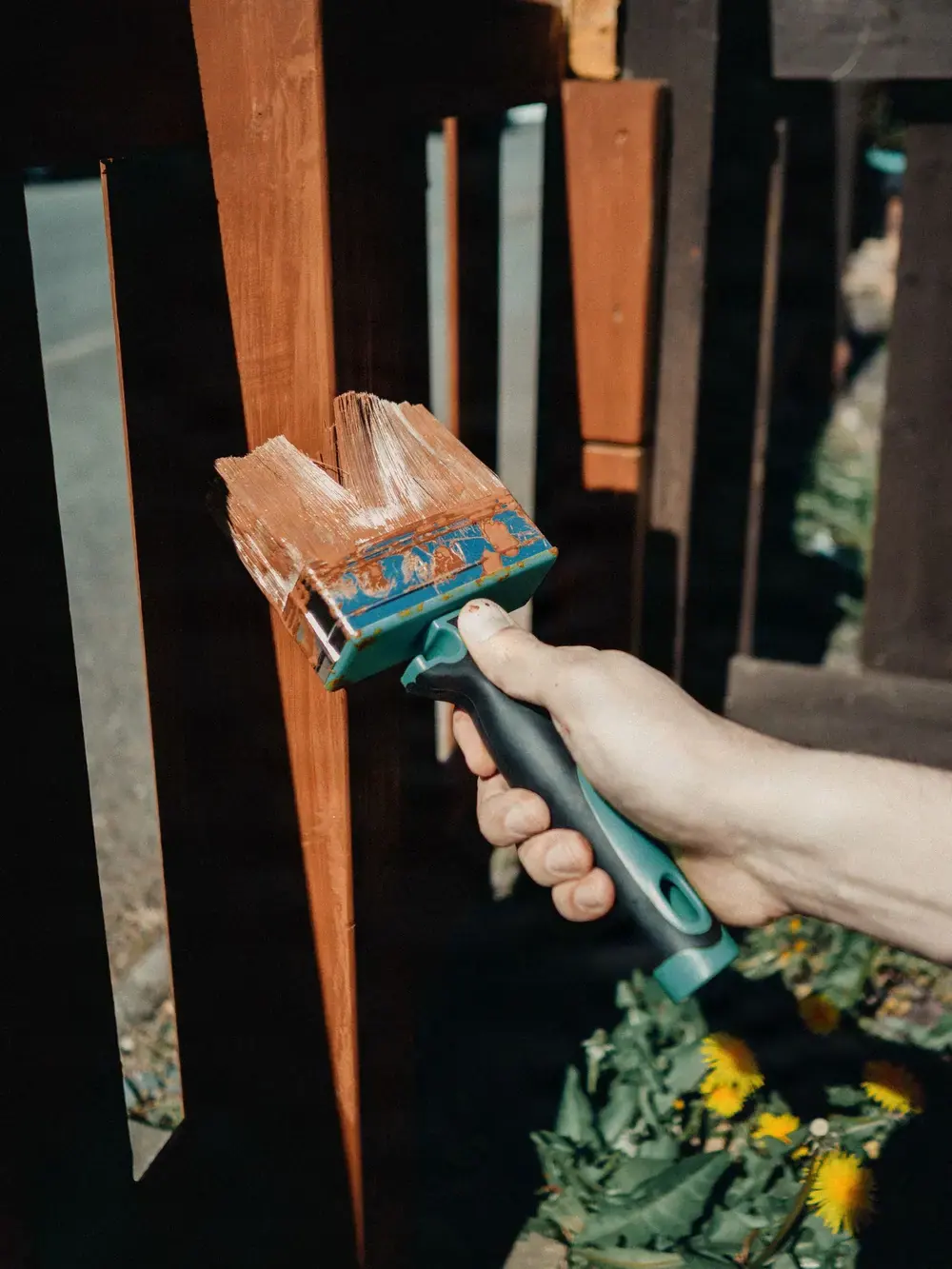
Rain finds the bottom of a fence first. NOAA's 1991-2020 normals for the Kinston 7 SE station count 53.03 inches of precipitation a year, 18.16 inches of it in June, July and August, the wettest summer of the NOAA stations around the towns we serve. On a fence, that water runs down the boards and collects where they meet the bottom rail and the ground. The posts draw it up from the soil. Grass, weeds and lawn sprinklers keep splashing the lowest foot of boards, and the shade at the foot of the fence slows drying.
So the bottom of a fence is where the wood grays and mildew shows up first, often while the tops of the same boards still look fine. That is why the usual choice for a fence is a stain that soaks into the wood and lets it dry out between rains, rather than a coating that holds water against the boards.
Privacy, Picket and Split-Rail Wood Fences
Each kind of fence takes stain a little differently:
- Privacy fences have tall boards side by side, or board-on-board, with boards overlapping on alternating sides. Stain has to be worked into the overlaps and gaps, and each face is a big area of wood in the sun.
- Picket fences have spaced pickets with tops and edges that need stain on every side, which takes more time per foot than a flat privacy fence.
- Split-rail fences are a few heavy rails between posts, with rough, split faces that soak up stain and need a brush to get it into the grain.
Wood fences are mostly pressure-treated pine or cedar. Treated pine is often wet from the treatment when the fence goes up, so a new pine fence has to dry before it can take stain; the drop-of-water test on our deck staining page works on fence boards too. Cedar is usually drier when it is built and has natural oils of its own, but it grays in the sun like pine when left bare. On a new fence, we check the wood at the estimate.
Surface Preparation for a Wood Fence
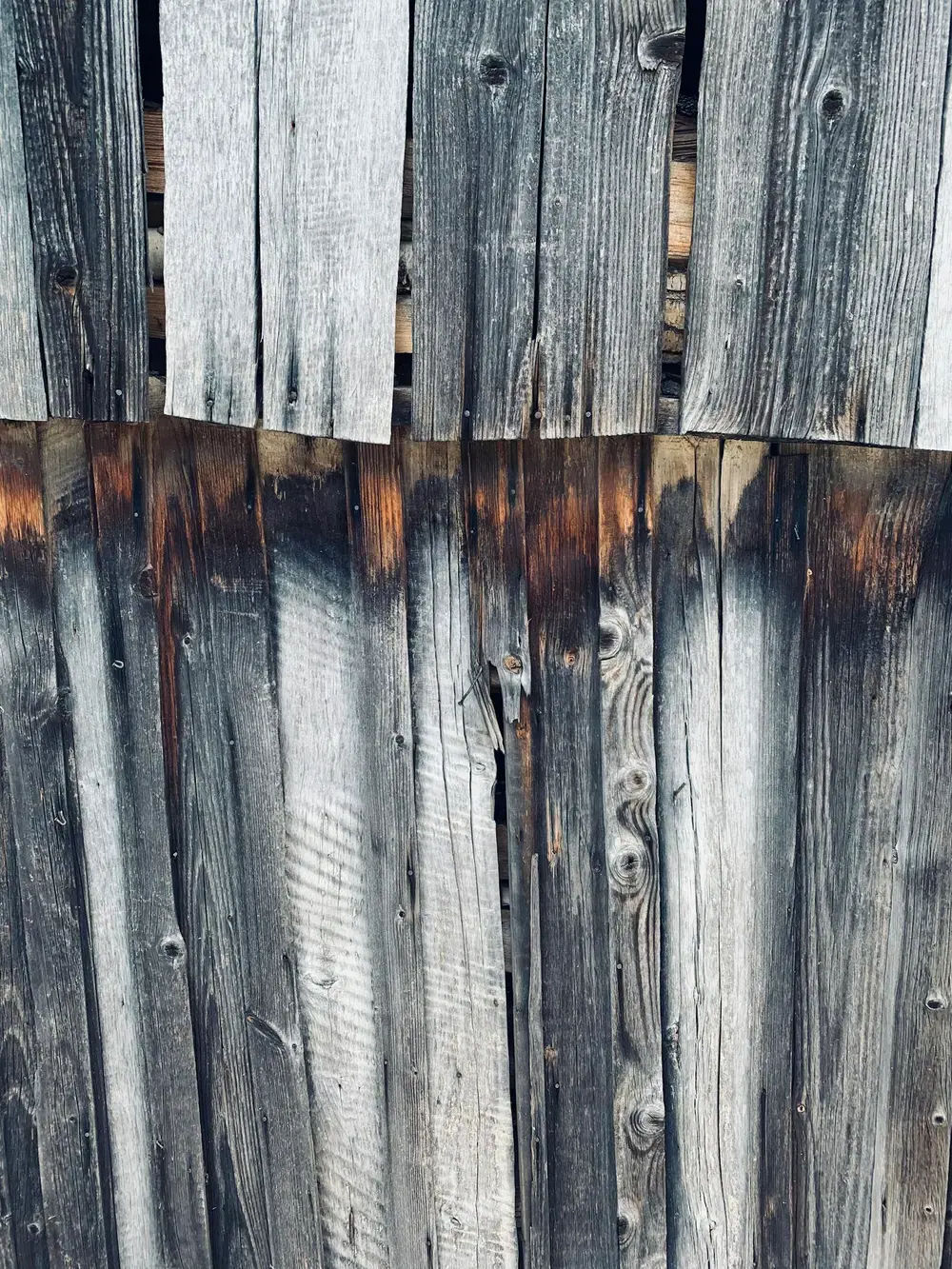
Before stain, the fence is cleaned. A wood cleaner goes on to lift dirt, mildew and the gray, sun-worn fibers on the surface, and the fence is rinsed from the top down. The lower boards and the posts usually need the most work, since that is where grime and mildew sit. Cleaning also opens the wood, so the stain soaks in evenly instead of sitting on a gray layer that would wear away with it.
Then the fence dries. A fence that gets sun on both faces is ready sooner than one with a shaded side against shrubs or a building, and the boards near the ground dry last. The rest of the prep:
- Clearing the fence line. Cut the grass and pull weeds along the fence a day or two before, and move anything leaning on it, so the bottom of each board can be reached.
- Protecting plants and grass. Shrubs, flower beds and the strip of lawn along the fence are rinsed before and after the cleaner and covered while stain goes on.
- Covering what's close by. House siding, a parked car and the gate's hinges and latch are covered or taped off.
- Scraping or sanding where an old solid stain is peeling, so the next coat goes on sound wood instead of loose stain.
A shared fence has a neighbor on the other side. We stain the side that faces yours, and the other side only when the neighbor has said yes, since that work and its drop cloths go on the neighbor's side of the line.
How the Stain Goes On
A fence has a lot of surface and a lot of edges, so stain is usually sprayed and back-brushed, or brushed on by hand where a sprayer doesn't suit: close to plants, on a breezy day or on a short run. The sprayer reaches the gaps and the sides of the pickets; the brush right behind it pushes the stain into the wood and picks up runs before they dry. The order:
- Posts and the bottom of each board, with stain worked into the end grain, where the fence takes the most water.
- The boards, one section between two posts at a time, top to bottom, so each section dries as one color.
- Tops, caps and edges, which face the sky and catch the rain.
- The gate, both faces and every edge.
Which Stain Is Best for a Wood Fence?
A fence stands upright, sheds water and isn't walked on, so the two common choices behave differently here than on a deck floor:
- Semi-transparent stain colors the wood while the grain and knots show through. As it weathers it fades rather than peels, so the next coat goes on after a cleaning, with no scraping. It suits a newer fence, cedar, or treated pine in good shape.
- Solid stain hides the grain like a thin paint. It suits an older fence whose boards have weathered to different shades, a fence with newer boards that stand out, or a fence you want to match the house trim. It holds up better on a fence than on a deck, though when it fails at the bottom it needs scraping before a new coat.
Both come in oil-based and water-based versions. A stained fence is usually recoated with the same type, or with solid stain over a faded semi-transparent; going from solid back to semi-transparent means taking the old stain off first.
For upkeep, watch the bottom foot of the fence. When the lower boards start to gray again, a cleaning and a fresh coat on the whole fence keeps the color even, and it is far less work than waiting until every board has gone gray.
How Much Does It Cost to Stain a Fence?
The price comes from the fence itself:
- Length and height. A tall privacy fence has far more wood per foot than a low picket fence.
- One side or both, and whether the neighbor's side is part of the job.
- The style. Board-on-board has overlaps to work into, pickets have edges and tops, and split-rail has rough faces.
- The condition. A gray, mildewed fence needs more cleaning, and peeling solid stain needs scraping.
- The stain, semi-transparent or solid, and the coats it calls for.
A new fence needs the least prep, with no gray wood or old stain to remove, once it has dried out. Tell us the length and height when you call or write through the contact page, and we will give you a free estimate. Shutters and porch swings are covered on our wood staining page. We stain fences in Wilson, Kinston and the rest of our service area.
How Long Is Your Fence?
Call (252) 299-2240 for a free estimate.
Questions We Hear a Lot

-
It depends on the fence's length and height, whether one side or both are stained, the style (privacy, board-on-board, picket or split-rail), the condition of the wood and any old stain, and whether you choose semi-transparent or solid stain. Call (252) 299-2240, tell us about the fence, and you get a free estimate once we have seen it.
-
A new fence needs less prep than an old one, with no gray wood or old stain to clean off, but its length, height, style and the stain still decide the price. Pressure-treated pine has to dry out after the fence is built before it can take stain, and a fence in full sun gets there sooner than a shaded one. We check the wood at the estimate and tell you whether it is ready.
-
A stain that soaks in and lets the wood dry is the usual choice, since the bottom of a fence stays damp. Semi-transparent stain shows the grain and fades rather than peeling; solid stain hides weathered or mismatched boards and can match the house trim. The right one depends on the fence's age and condition and the look you want.
-
Only if your neighbor says yes. Staining the far side means working and laying drop cloths in the neighbor's yard, so we stain your side unless you have both agreed to both. Doing both sides at once keeps the two faces of the boards protected alike.
-
The lowest boards and the posts stay wet the longest: rain collects at the base, the posts draw water from the soil, and grass and sprinklers keep splashing them. Wet wood grays and grows mildew sooner, so the bottom shows wear while the top still looks stained. Cleaning and restaining when the bottom first grays keeps the rest of the fence from following.
-
Yes. Free estimates are available. Call (252) 299-2240 or use the contact form.
-
We are based in Wilson, NC 27893 and serve homes in Wilson, Greenville, Rocky Mount, Goldsboro and Kinston. Call (252) 299-2240 or use the contact form to talk about your project.
-
- Location Based in Wilson, NC 27893
- Free Estimates Call or email usWilson, NC


