 Call: (252) 299-2240


- Wilson Based
A painting company located in Wilson, NC 27893.
- Free Estimates
Professional painting services. Call (252) 299-2240 for a free estimate.
 Wilson Based
 Free Estimates
Garage Floor Painting
Garage floors are one of the services we list, and garage floor painting is part of the residential painting we do from Wilson, NC. How long a painted floor holds depends on two things you never see once it is done: the prep under the paint and the weather on the day it goes down.
Garage Floor Painting in Wilson, NC
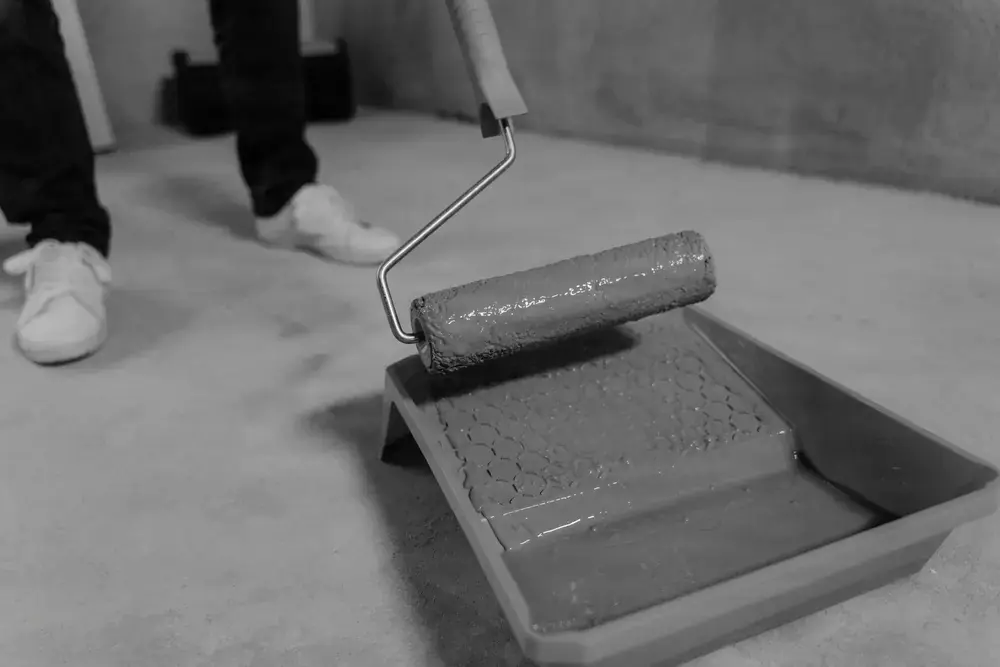
Bare concrete looks solid, but its surface wears. Tires, boots and grit slowly grind the top layer into a fine gray dust that ends up on shelves, in the car and inside the house. Concrete is porous too, so an oil drip or a spill soaks in and stays as a dark stain. Floor paint closes that surface:
- Less dust. A painted slab stops shedding.
- Stains stay on top, where a drip can be wiped up.
- Easier sweeping than rough concrete.
- A clean look, which matters when the garage is also the way into the house.
Floor paint is made to take foot traffic, tires and cleaning, which wall paint is not. The common choices are water-based acrylic floor paint and oil-based floor enamel, and the label sets the rules for prep, temperature, recoat time and cure.
Garage Floor Painting Prep
Paint holds only as well as the surface it grips, and a garage slab is usually dusty, polished smooth where the tires run and spotted with oil. Surface preparation is its own line on our flyer, and on concrete it goes in this order:
- Everything comes out, so the whole slab can be cleaned and painted in one piece.
- Oil and grease spots are degreased. A degreaser is scrubbed into each spot with a stiff brush and rinsed, more than once on old, deep stains. Paint over oil peels there first.
- The slab is cleaned, then etched or ground. An etching solution scrubbed in and rinsed, or a floor grinder, opens up the smooth top of the concrete so paint can bite. A quick test: sprinkle water on it. If it darkens and soaks in, the concrete is open. If it beads up, it needs more work.
- Cracks and chips are filled with a concrete patch. The straight cut lines across the slab are control joints, there to let the concrete crack along a neat line, so they are cleaned and painted, not filled.
- Old paint is checked. On a floor painted before, loose paint is scraped off and the edges sanded.
- Edges are taped off: the bottom of the walls and the threshold of the door into the house.
Two checks come before painting day. The first is moisture: water vapor can rise through a slab from the ground, and paint over a damp slab blisters from underneath. The simple test is a square of clear plastic taped down tight on all four edges and left for a day. Droplets under it, or darker concrete, mean the slab is too wet for now. The second is age: new concrete has to cure first, and most floor paint labels ask for about 28 days.
Heat, Rain and Floor Paint in Eastern NC
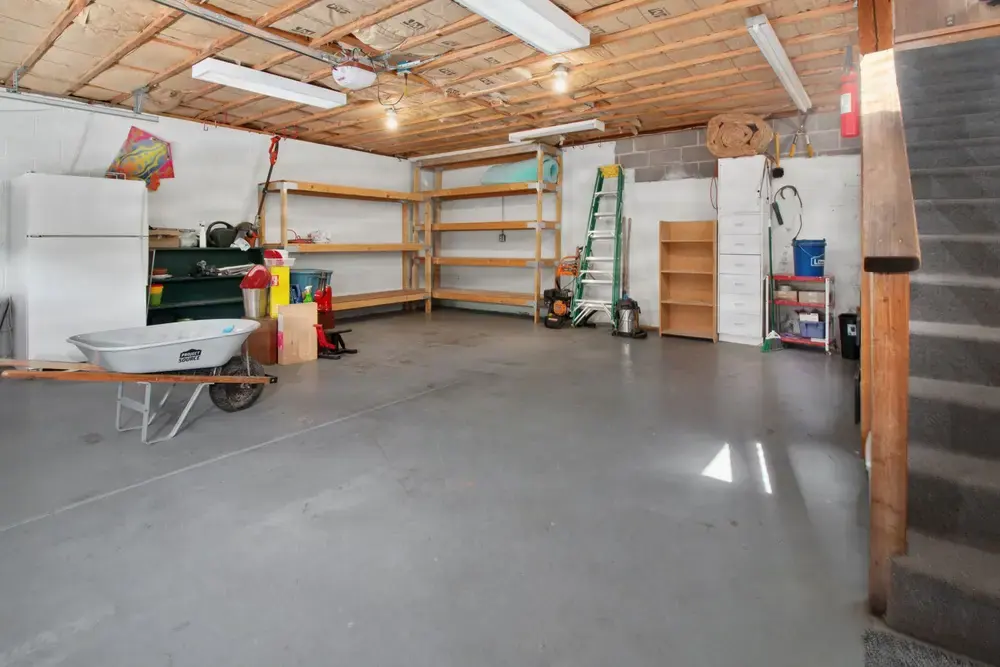
NOAA's 1991-2020 normals for the Kinston Agricultural Research station count 62.1 days a year at 90°F or hotter, and 17.68 inches of rain in June, July and August, the wettest stretch of the year. Both matter on a concrete floor:
- Temperature. Floor paint labels give a range for the air and for the slab. Sun through an open garage door heats concrete fast, and paint on a hot slab dries before it levels out, leaving lap marks and a weaker bond. In winter a slab can stay below the label's minimum even on a mild afternoon.
- Moisture. NOAA's normals put the summer dew point near 69°F; mornings run near saturation. Warm, damp air on a cooler slab makes the concrete sweat a thin film of water, and paint will not bond to it. The common rule is a slab at least 5°F warmer than the dew point.
- Cure. Paint feels dry long before it has cured. Hot tires can lift paint that has not cured: tires warm from a summer road soften new paint, which sticks to the tread and pulls up. Humid weather slows the cure, so the wait before parking runs longer in summer.
Spring and fall are the easy seasons for a garage floor: milder slabs, drier air and cooler tires. Summer work is planned around the hottest part of the day and the dry stretches between storms, with the plastic test done close to painting day, because wet spells raise the moisture in a slab.
How the Floor Is Painted
With the slab clean, open, dry and inside the label's temperature range, the painting goes in a set order:
- Primer, if the product calls for it. Some floor paints go straight onto etched concrete. Others want a primer first, which also evens out a patchy slab.
- Cut in at the walls with a brush, around posts and along the step up to the house.
- Roll in sections from the back wall toward the garage door, keeping a wet edge so the sections blend without lap marks.
- Two coats. Two thin coats bond and wear better than one heavy coat, which stays soft and can wrinkle. The second goes on within the label's recoat time.
- An anti-slip additive, if you want it. Satin and gloss floor paint gets slick when rain drips off a car. A fine grit mixed into the last coat adds grip underfoot, at the cost of slightly harder sweeping.
- Cure before walking, then before driving. The label gives a walk-on time and a much longer drive-on time, and the garage stays empty until the second one has passed.
Garage Floor Paint Colors
The color of a garage floor is mostly about what it hides. Grays and tans hide dirt, dust, leaves and the tire marks that collect where the car turns in. A mid gray or a sandy tan looks clean longer than white, which shows every tire mark, or a very dark color, which shows every bit of dust and lint. A lighter shade brightens a garage with one bulb and no windows. Some homeowners paint a border or a work area in a second color, which means more cutting in, so decide on it before the estimate.
Garage Walls and Doors
The floor is often one part of a garage job. Garage walls take dings from car doors, bikes and lawn tools, and in many garages the drywall was taped and never painted. They are painted like any room inside, and our interior painting page covers the prep and the sheens. Dents, holes and loose tape are a drywall repair first. Walls and the door into the house are best painted before the floor, so drips land on concrete that is about to be cleaned.
We paint garage floors in Wilson and the other towns we serve, Goldsboro among them. Send us a message or call (252) 299-2240 with the size of the garage and whether the floor has been painted before. Photos of the oil spots, cracks and any peeling paint help.
Is Your Garage Floor Next?
Call (252) 299-2240 for a free estimate.
Questions We Hear a Lot

-
Everything comes off the floor, oil and grease spots are degreased, and the slab is cleaned, then etched or ground so the paint can bite. Cracks and chips are filled, loose old paint is scraped off, and a plastic-sheet test checks for moisture coming up through the slab. A new slab waits until it has cured, as long as the paint label asks, often about 28 days.
-
Grays and tans are the practical choice: they hide dirt, dust and tire marks better than white or a very dark color. A lighter shade brightens a dim garage. If you want a border or a second color for a work area, say so at the estimate, because it adds cutting in.
-
Wait for the drive-on time on the paint label, which is much longer than the walk-on time, and allow extra in humid or cool weather. Paint can feel dry long before it has cured, and hot tires can soften paint that has not cured and pull it up.
-
It depends on the size of the garage, how many oil stains need degreasing, how many cracks and chips need filling, whether old paint has to come off, and whether you want primer, an anti-slip additive or a second color. We look at the floor and give you a free estimate. Call (252) 299-2240.
-
Yes. Free estimates are available. Call (252) 299-2240 or use the contact form.
-
We are based in Wilson, NC 27893 and serve homes in Wilson, Greenville, Rocky Mount, Goldsboro and Kinston. Call (252) 299-2240 or use the contact form to talk about your project.
-
- Location Based in Wilson, NC 27893
- Free Estimates Call or email usWilson, NC


